
Contents
- 1 Why a Community Is Your Best Long-Term Asset?
- 2 Creating a Real Sense of Belonging
- 3 Get Specific About Who You're For
- 4 Build Traditions Worth Returning For?
- 5 Make Individuals Feel Recognized
- 6 Staying Connected Between Events
- 7 Turning Loyalty into Membership and Repeat Attendance
- 8 Make Membership Feel Like an Inner Circle
- 9 Understand the Financial Upside
- 10 Reward People for Coming Back
- 11 Using Technology to Personalize at Scale
- 12 Talk to Each Group on Its Own Terms
- 13 Let a Modern Platform Carry the Load
- 14 Where AI Sharpens Your Edge?
- 15 How Pricing and Promotion Shape Trust?
- 16 Bringing the Pieces Together
Filling seats for a single event is hard. Filling them again and again, season after season, without burning through your budget on ads every time? That feels almost impossible to many organizers. Yet some events manage it with an ease that looks like magic. The secret isn’t a bigger marketing spend or a flashier headliner. It’s a community that shows up because it wants to, not because it was persuaded to.
When you have that, ticket sales stop being a gamble. People buy early, bring friends, and treat your events as fixtures in their calendar. This guide breaks down how event community building creates that kind of loyalty, and how to turn it into reliable, year-round sell-outs.
Why a Community Is Your Best Long-Term Asset?
Imagine two organizers running similar events in the same city. One starts every campaign from scratch, chasing cold audiences with paid ads and hoping the math works out. The other simply tells their existing fans the date and watches tickets disappear. Same effort going in, wildly different results coming out. The difference is community.
The economics here are impossible to ignore. Winning a brand-new attendee costs real money, and that cost climbs as advertising gets more competitive. A returning fan, by contrast, costs almost nothing to reach and tends to spend more per visit. They also bring guests and talk you up to their networks for free. Over time, a base of recurring event attendees quietly slashes your acquisition costs while lifting your revenue. That’s the compounding return that makes communities so powerful.
There’s a stability benefit too. Demand for any single event can swing for reasons you can’t control, from weather to competing happenings to the general mood of the market. A loyal community acts as a buffer against all that noise. When a dependable slice of your venue is spoken for before public sales even open, you can plan, budget, and forecast with a confidence that one-off promotion never delivers. That dependability is what sustainable event audience growth really looks like in practice.
Creating a Real Sense of Belonging
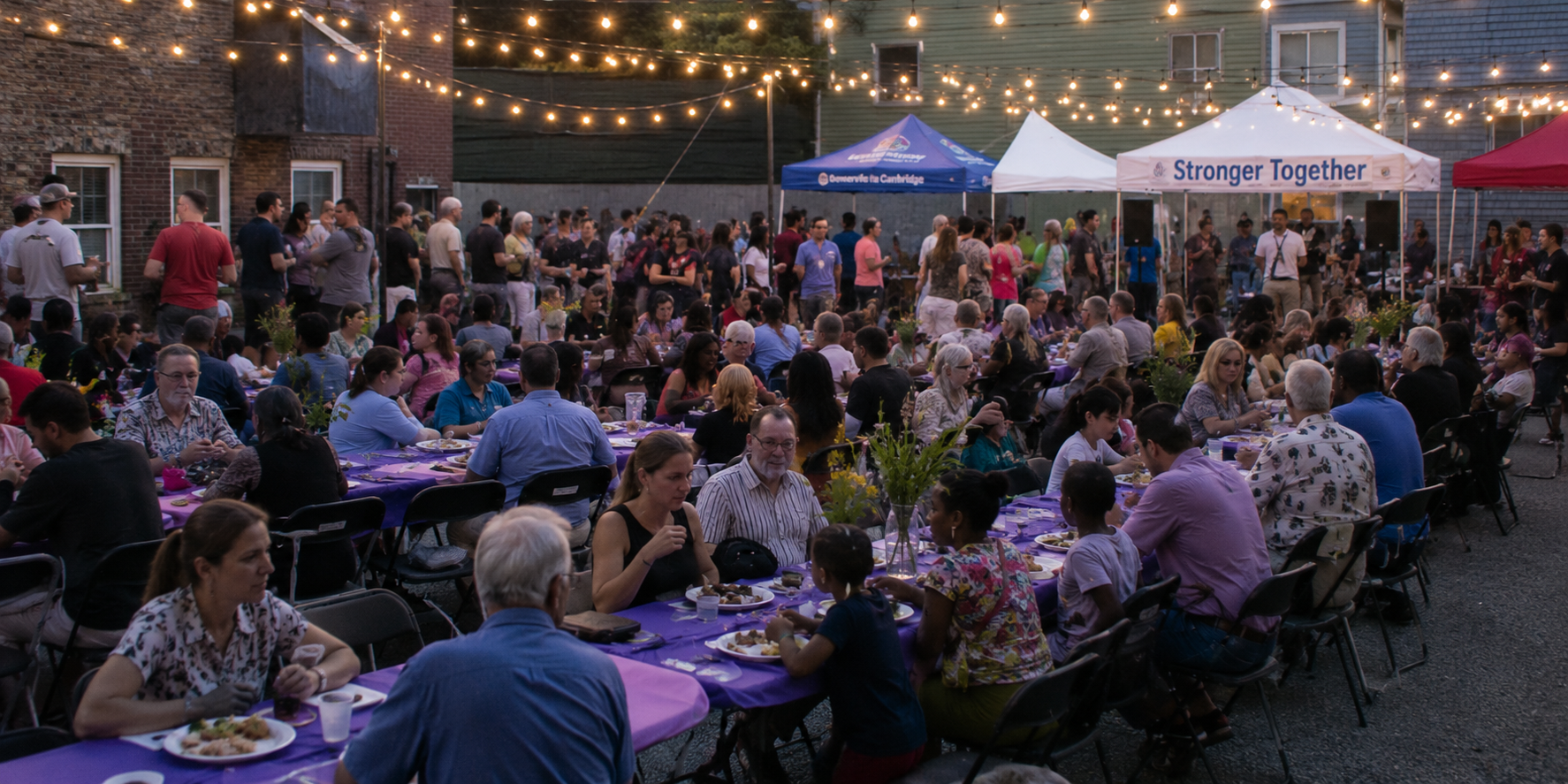
Belonging is the heart of every event people refuse to miss. You can’t manufacture it with a clever slogan or a discount code. It grows when attendees feel like part of something rather than a name on a guest list. Your job is to give them that feeling on purpose.
Events that try to appeal to everyone end up resonating with no one. The communities that thrive form around a sharp, clear identity, a shared passion, taste, or goal that makes people think “these are my people.” That clarity guides every decision you make, from the talent you book to the way your team greets guests at the entrance. A tightly focused event built for a particular crowd will always pull harder than a broad one hoping to please all comers. Specificity is what gives a community its magnetism.
Get Specific About Who You're For
Events that try to appeal to everyone end up resonating with no one. The communities that thrive form around a sharp, clear identity, a shared passion, taste, or goal that makes people think “these are my people.” That clarity guides every decision you make, from the talent you book to the way your team greets guests at the entrance. A tightly focused event built for a particular crowd will always pull harder than a broad one hoping to please all comers. Specificity is what gives a community its magnetism.
Build Traditions Worth Returning For?
Rituals turn a series of separate events into one continuing story. A signature opening, a recurring moment people look forward to, an inside reference that regulars recognize, these small, repeated details create a culture that newcomers want to join, and veterans take pride in understanding. When your attendees start using your language, wearing your merchandise, or spotting familiar faces across events, you’ve crossed from running events to nurturing a tribe. Those traditions give people a reason to keep coming back beyond the line-up itself.
Make Individuals Feel Recognized
Few things deepen loyalty faster than feeling genuinely seen. Remembering a returning guest’s name, thanking long-time supporters by name, or noting someone’s preferences tells people they matter as individuals, not just as ticket buyers. That recognition transforms a casual visitor into someone who feels personally connected to what you’re building. Belonging, stripped down to its core, is simply the experience of being wanted and remembered, and it’s surprisingly cheap to deliver.
Staying Connected Between Events
This is where most organizers quietly sabotage themselves. They pour everything into the event, then vanish until it’s time to sell ticket online for the next one. That stretch of silence is where communities slowly die. A community needs a steady pulse, and the gaps between your events are exactly where that pulse continues or fades to nothing.
Treat your off-season as prime relationship time. Pull back the curtain on how the next event is taking shape, celebrate members of your community, and send newsletters that actually give people something worth opening rather than just a sales notice. Keep the conversation flowing on social channels, and consider smaller touchpoints like casual meetups, livestreams, or an online space where regulars can hang out. The goal is to stay a genuinely welcome part of people’s lives instead of a voice that only reappears when you want their money.
When you maintain that presence, your event promotion stops feeling like an interruption and starts feeling like good news among friends. By the time tickets go live, you’re not introducing yourself to strangers. You’re talking to people who already trust you and have been waiting for the date. That warm audience moves fast, which is how an on sale becomes a sell-out in hours rather than a slow grind over weeks. Consistent engagement does most of the work long before any ticket sales actually begin.
Turning Loyalty into Membership and Repeat Attendance
Once you’ve built an engaged following, the logical next move is to give your most devoted fans a formal way to go deeper. A well-designed event membership program rewards their commitment while handing you predictable income and a guaranteed core of attendance for every single event.
Make Membership Feel Like an Inner Circle
The art of a great membership lies in making it feel like belonging rather than buying. Members should sense they’ve stepped through a door that others haven’t. Early access to tickets ahead of the public, member-only event ticket price, reserved seating, exclusive content, and invitations to private gatherings all reinforce that elevated status. When membership reads as identity instead of a discount scheme, people join for who it makes them rather than what it saves them, and that emotional commitment holds for tighter than any coupon ever could.
Understand the Financial Upside
The membership fees are nice, but the real win is stability. Members reduce your dependence on expensive acquisition because they reliably show up and bring others with them. They also smooth out the unpredictability that makes event planning nerve-wracking. Knowing a solid portion of your seats is already claimed before public sales open tightens your forecasting, lowers your stress, and makes budgeting far more rational. Across several cycles, that dependable base becomes the quiet engine driving your sell-outs.
Reward People for Coming Back
Not everyone will join a membership, and that’s fine. You can still build loyalty among casual fans by recognizing repeat attendance directly. Loyalty pricing, surprise upgrades, exclusive merchandise, or genuine public appreciation all make returning feel better than showing up for the first time. When a repeat guest notices that their loyalty earns real recognition, they feel valued in a way that money can’t easily buy. That feeling is what cultivates a steady population of recurring event attendees who treat your events as something they simply don’t skip.
Using Technology to Personalize at Scale
Communities feel intimate but keeping them intimate as you grow demands good tools and good data. Past a certain size, you can’t hold every attendee’s history in your head, so your systems need to do the remembering for you.
Talk to Each Group on Its Own Terms
Your audience isn’t a single uniform mass. First-timers, loyal members, premium buyers, and price-sensitive fans all want different things and respond to different messages. Segmenting them lets you tailor your communication, your offers, and even your event ticket prices to suit each group instead of blasting everyone with identical content. A newcomer might get a warm welcome sequence that helps them feel at home, while a veteran gets insider updates and first pick of tickets. Relevance drives engagement, and engagement drives conversion.
Let a Modern Platform Carry the Load
A capable event ticketing platform is the backbone that makes all this practical. Every purchase reveal something about who buys, how often, and what they value, gradually building a rich picture of your community. The right ticketing features let you filter audiences, automate personalized outreach, run your membership, and measure how each segment responds to a given campaign. Solid reporting replaces guesswork with clarity, showing you, plainly which efforts pay off, and which fall flat so you can put your energy where it actually counts.
Where AI Sharpens Your Edge?
This is where smart technology earns its keep rather than just sounding impressive. An AI ticketing system for events can spot patterns you’d otherwise miss, such as loyal attendees who are quietly slipping away, the price points that convert best for a particular group, or the message most likely to move a specific person to act. Catching those signals early lets you re-engage fading members and adjust your approach in real time, before momentum is lost. Technology will never replace the human warmth at the centre of any community, but it massively extends your ability to deliver that warmth at scale, fuelling both event audience growth and steadier ticket sales.
How Pricing and Promotion Shape Trust?
Price and promotion do more than move individual tickets. They shape how people feel about belonging to your community, and that feeling determines whether they stay.
Pricing is a signal as much as a number. When you set event ticket prices, you’re telling people what kind of experience to expect and how exclusive the circle is. Member rates, loyalty tiers, and thoughtful tiered access reward commitment and let your most dedicated supporters feel they’re getting something others can’t. Handled well, this strengthens loyalty. Handled carelessly, through constant heavy discounts or erratic jumps, it erodes trust and trains people to hold out for the next markdown instead of buying with confidence. Consistency and fairness protect the relationship just as much as they protect your revenue.
Promotion works best when it grows naturally out of the community you’ve built. For a strong community, effective event marketing looks less like advertising and more like sharing news with friends. In fact, your most persuasive event promotion won’t come from you at all. It comes from attendees who post their experiences, tag their friends, and vouch for you in ways no paid campaign can match. Encourage this by designing genuinely shareable moments, the highlights and pleasant surprises people instinctively want to capture. Add referral incentives or an ambassador program that rewards members for bringing newcomers, and your community starts marketing itself. That organic momentum is the most sustainable route to repeat attendance and a steady flow of referrals.
Bringing the Pieces Together
A community that sells out year-round never comes from one clever trick. It emerges when many deliberate choices work in harmony. You start by defining exactly who your event serves and cultivating real belonging through identity, ritual, and recognition. You stay present between events so the bond never goes cold. You formalize loyalty with an event membership program, reward your most committed fans, and give them easy ways to spread the word.
From there, you segment your audience for relevance, lean on a smart event ticketing platform and it’s ticketing features to scale that personal touch, and use an AI ticketing system for events to act on insight before any momentum slips. You price and promote in ways that build trust rather than chip away at it, and you stay relentlessly focused on repeat attendance and referrals.
None of this happens fast, and that’s precisely why it works. Anyone can buy a short burst of attention. Very few have the patience to build something people truly belong to. But when you do, the rewards compound with every cycle. Your event marketing gets cheaper, your event promotion gets easier, your event audience growth becomes self-sustaining, and your ticket sales grow more predictable year after year. Best of all, you end up with something far more valuable than a packed room on any single night: a living community of recurring event attendees who feel at home, bring their friends, and wouldn’t dream of missing whatever you do next.
Frequently Asked Questions
How long does it take to build a community that sells out events?
There’s no fixed deadline, since community building is an ongoing practice rather than a one-time campaign. Many organizers see real traction within a year of consistent effort, especially once they add a membership program and stay in touch between events. The pace depends on how clearly you define your identity and how reliably you deliver value. Each cycle strengthens the foundation, so progress tends to speed up the longer you commit.
Do I really need a membership program to build community?
Not strictly, but a well-designed one accelerates everything and stabilizes your revenue. If a full program feels premature, start with simple loyalty perks and early ticket access for returning guests. Once demand is clear and your community has grown, formalize a membership to lock in that core attendance.
How does an AI ticketing system actually help with retention?
It helps you understand and serve people at scale. AI ticketing system for events can flag attendees who are drifting away and predict which offers will resonate with each group. Acting on those insights lets you re-engage fading fans and send relevant messages that keep both your community and your ticket sales healthy.
What’s the most common mistake organizers make?
Going silent between events. Many pour everything into the event itself, then disappear until the next on-sale. That silence quietly dissolves the connection they worked so hard to create. Staying present and useful year-round keeps loyalty alive so people are ready to buy the moment tickets go live.